Peter Molyneux said he’s done making video games. It’s a bittersweet thought, because despite his (well-deserved) reputation for writing checks he can’t cash, you can’t deny his impact on the industry. Populous was a bit before my time, but many will tell you Black & White and Fable were genuinely innovative games. Both are also uniquely Molyneuxvian in concept and execution.
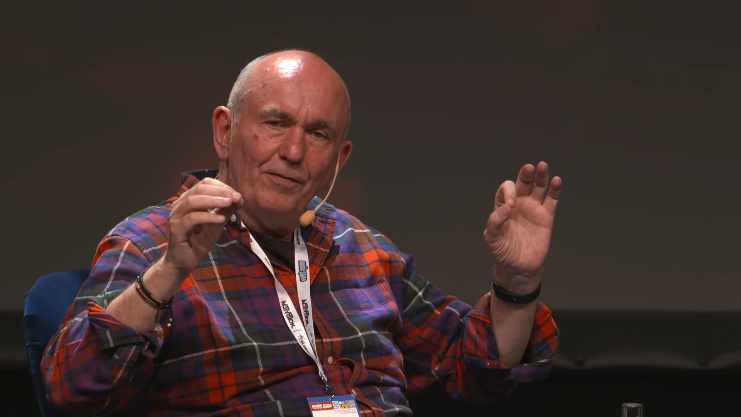
Sadly, he’ll probably be best remembered as the poster child for “don’t believe it until you see it”. Of course, there’s nothing wrong with having a bunch of rough drafts in a bin somewhere. Just like every writer has a thousand and one ideas that never see the light of day, of course an ideas guy as prolific as Molyneux has just as many riffs that never resolve. His mistake was always playing them out loud before they found their groove.
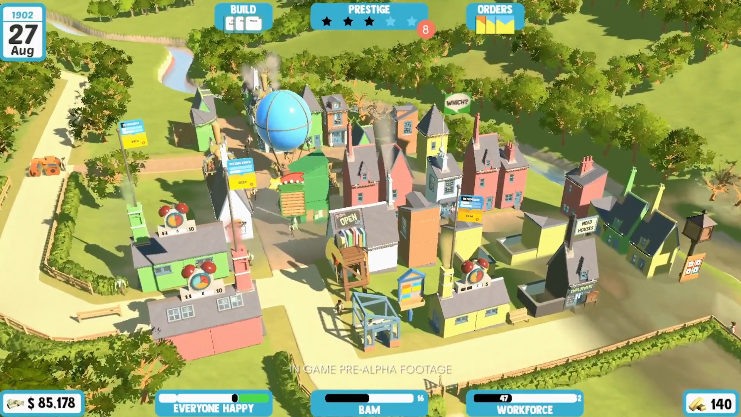
In the grand scheme of things, Molyneux’s mythomania was largely harmless. In time, he settled into a predictable pattern of bombastic game announcement, followed by numerous delays, then underwhelming release. We all learned not to take him seriously. At the end of each cycle, we’d spend a few days laughing at his expense before moving on to the next serious thing in games. We did it with Godus, Curiosity, Fable II and III, and his ill-fated Dungeon Keeper reboot. Frankly, after recently watching a gameplay preview of Masters of Albion, we might have to do it again.
But there’s one cancelled Molyneux game that I refuse to move on from. It lives forever in the recesses of my brain, summoned forth whenever he’s the topic of conversation. DangThat happens less and less frequently—he’s older now and his ideas not so overflowing as they once were—but it happened again today because Peter Molyneux said he is going to stop making games.
I need him to acknowledge how weird Project Milo was.
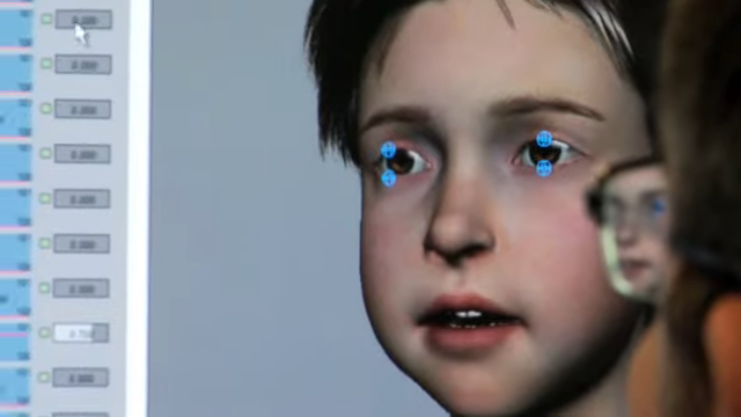
Fifteen years ago, Molyneux got up on stage at TED to boast to a live audience about the little boy he had built from pixels and bits. The soloist lifts his instrument. Who are we getting today? Bechet or Squidward?
In his typical self-aggrandizing manner, Peter shares his goal ‘to create a character which seemed alive. Which noticed me. That could look me in the eyes and feel real.’ Peter presents this as a breakthrough notion, not the centuries-old dream of novelists, technologists, and philosophers. Imagine that, this is the first time anyone has had the courage and know-how to attempt a solution, and today, he is reaDangdy to demonstrate his creation in action.
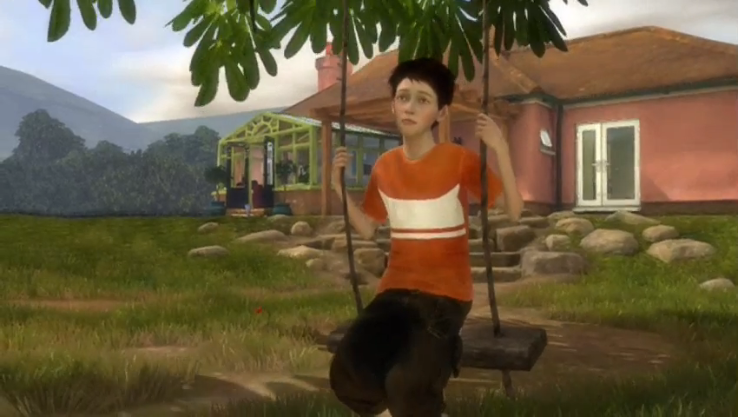
We get our first look of the boy. His name is Milo, a melancholy lad, brown-haired with an expression that’s perpetually just shy of a pout. Milo, Peter explains, has just moved to New England from London, and amidst the hubbub of getting settled into a new country, Milo’s parents just haven’t been able to make much time for the boy.
And so Milo turns to the only company he has—the player. The player acts as a sort of guiding figure, a surrogate for the busy adults in Milo’s life. The player can teach Milo things, Peter explains, like how to skip stones in the nearby pond. Sometimes, the player makes decisions for Milo, which affect him in intangible and ominous ways. Milo Has Changed, threatens a popup text after the on-stage operator casually instructs Milo to stomp a garden snail to death. Peter plays it off for laughs, but all he gets is uneasy chuckles in response. But how has he changed, Peter?
Did we just witness the birth of a serial killer?
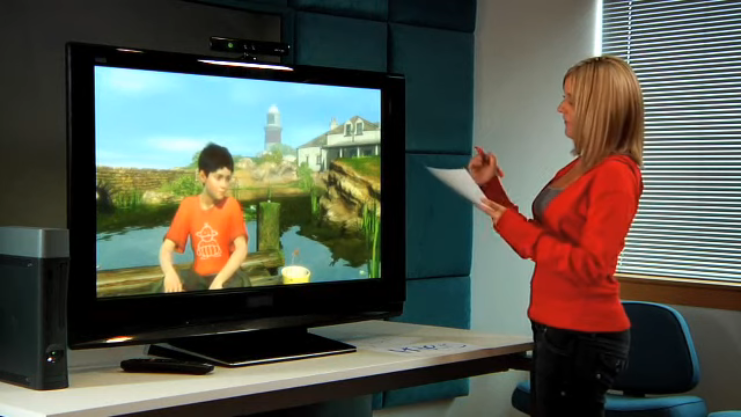
It’s crucial that I state here that the relationship between the player and Milo feels uncomfortable, though Peter is somehow blind to this. In all the demos Project Milo has ever produced, the player is an adult, and this is also the case for most of the game’s promotional imagery. After all, the player is a wise spirit guide to the boy, what wisdom could one child impart to another? This, of course, has the unsettling implication that Molyneux always intended Project Milo to be about a lonely 11-year-old boy who, absent his parents, confides in and is influenced by a grown-up he doesn’t know. What does this tell us about Peter Molyneux?
A sparsely furnished room. Milo is seated atop an unopened box, head down, in his thoughts. He is alone—except for the player, of course. Milo quietly shares that he misses his old house and his old neighborhood and all his friends.
Go, Milo. Quickly. There’s a way back. Walk into the pond behind your house, and never look back. Hold your breath now, for as long as you can. Let the water take you home, is what I wished the operator had whispered into his microphone that day. Let the curatins come rashing down, stage dive into the pit orchestra, show us that the boy would follow the disembodied spirit to his own doom.
Unsurprisingly, Peter Molyneux is a big fan of AI in video games. Speaking to EuroGamer, he predicted, in his typical confidence, that generative AI is destined to replace the work of dozens of human reatives. It reads as more than confident, though—he’s excited for the day this happens.
But that’s just his big metal technophile heart beating. I don’t think Peter loves video games anymore. He probably hasn’t for some time. He was previously a supporter of NFTs and games tied into the blockchain—a concept that backfired spectacularly on him during the development of his last game, Legacy. Peter Molyneux just gets really, really excited about new technologies, and all his self-aggrandizing and prognosticating makes him look as if he’s somewhere at the vanguard of the next technological breakthrough.
Going back and watching his previous interviews, I began to get a sense for why Molyneux was blind to the slightly disturbing, inappropriate vibes of Project Milo.
Milo was never more than bits of code to him, a means to techno-godness. How could our relationship with Milo be strange? He’s an AI with pre-recorded audio lines and a discrete logic tree. Why wouldn’t the player be an adult? Molyneux isn’t here to impress children.
We all teased him for dreaming to simulate human consciousness, but Molyneux never bought into the dream he was selling. He just hoped that with the right words and enough enthusiasm, we’d all be convinced, as we had been so many times before, that Peter Molyneux is awesome.