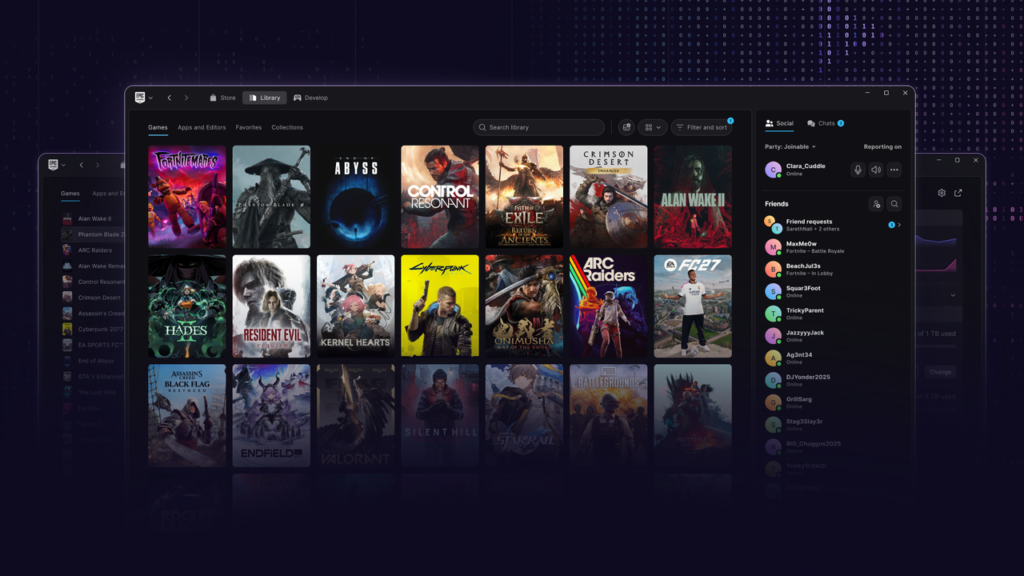
If you’ve built an Epic Games library and would like a less roundabout way to use it on a Steam Deck, Epic has finally named SteamOS in its support plans. The company’s new launcher is headed for Valve’s operating system, although there’s no date to put on the calendar yet.
Epic communications director Jake Jones confirmed the plan to GamingOnLinux in a November 6 report. The launcher is still in Preview, and Jones said Epic intends to support a broad range of Linux distributions.
“We plan to support as many Linux distributions as possible, including Fedora, SteamOS, Cachy, Omarchy, and more,” he said.
Jones also said Epic was evaluating different packaging formats and planned to restore the AppImage download during November. AppImage is a way of distributing a Linux application in a portable package; its return could make the preview easier to try across different systems. It isn’t a dated promise of finished SteamOS support.
The Linux version itself isn’t waiting to be invented. Epic launched the rebuilt client’s public preview on October 14, alongside Windows and macOS versions. Its current requirements list Ubuntu 22.04 LTS or newer and Debian 12 or newer, with Fedora coming soon. Other distributions may work, Epic says, but aren’t officially tested or supported yet.
That leaves SteamOS in the promising-but-not-finished column. For Steam Deck owners, the attraction is straightforward: an official way to manage an existing Epic library without depending entirely on a community launcher.
Those community options already do useful work. Heroic Games Launcher supports Epic, GOG, and Amazon libraries on Linux and Steam Deck, and offers tools for managing Wine and Proton compatibility. Epic’s arrival would add a first-party option, rather than suddenly make those libraries accessible for the first time.
Nor does a native launcher turn its Windows games into native Linux releases. Epic warns that many titles still need a compatibility layer, so the games you actually want to play remain the test that matters. The SteamOS statement doesn’t provide a game-by-game compatibility promise.
Still, having Epic explicitly name the platform is welcome. An account full of games is more useful when accessing it doesn’t feel like a side project. Now Epic needs to turn that support plan into something Deck owners can install, update, and comfortably use.