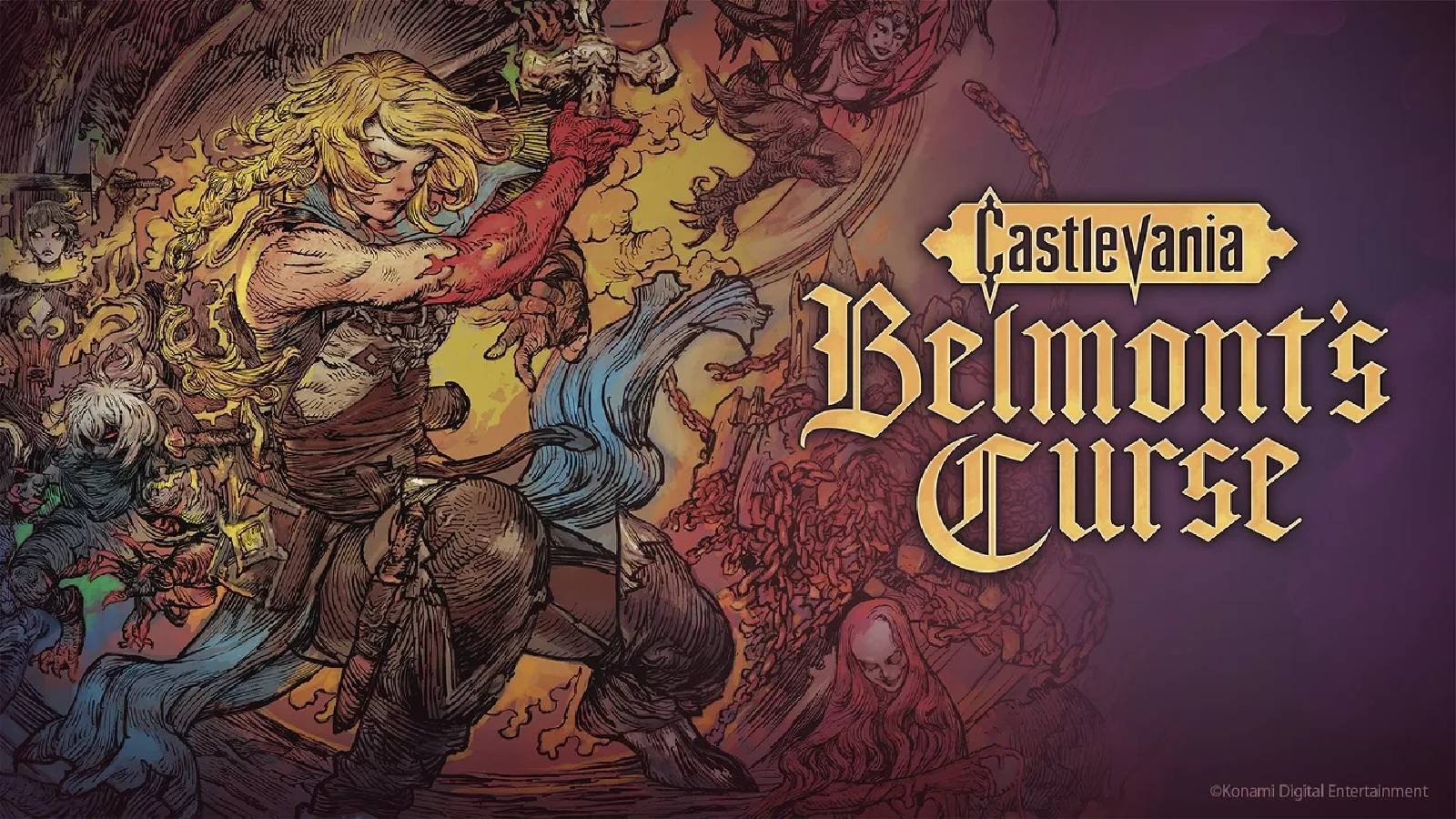
This is embarrassing, but I call myself a fan of metroidvanias and I’ve never beaten a Castlevania in my life. Depending on who you ask, that either makes me the last person you should come to or the only person whose opinion is worth a damn when it comes to impressions about the demo for the series’ latest, Castlevania Belmont’s Curse.
The only thing I knew about Belmont’s Curse going in was that there was some mild controversy surrounding the visual style. The discussion prompted me to look up screenshots from previous games in the series and… yeah—I get it. Belmont’s Curse really is quite the departure from everything that’s come before it.
(By the way, this is also how I learned that there hasn’t been a mainline Castlevania since 2014!)
As a person with zero sentimental attachment to Castlevania, I’m really digging the look. It conjures roguelike metroidvania Dead Cells with its distinctive high-saturation gothic aesthetic. As someone who’s spent a stupid number of hours in that game, I felt right at home in the Paris of Belmont’s Curse. What a happy surprise to find, then, that Dead Cells developer Twin Motion is also leading development on Belmont’s Curse.
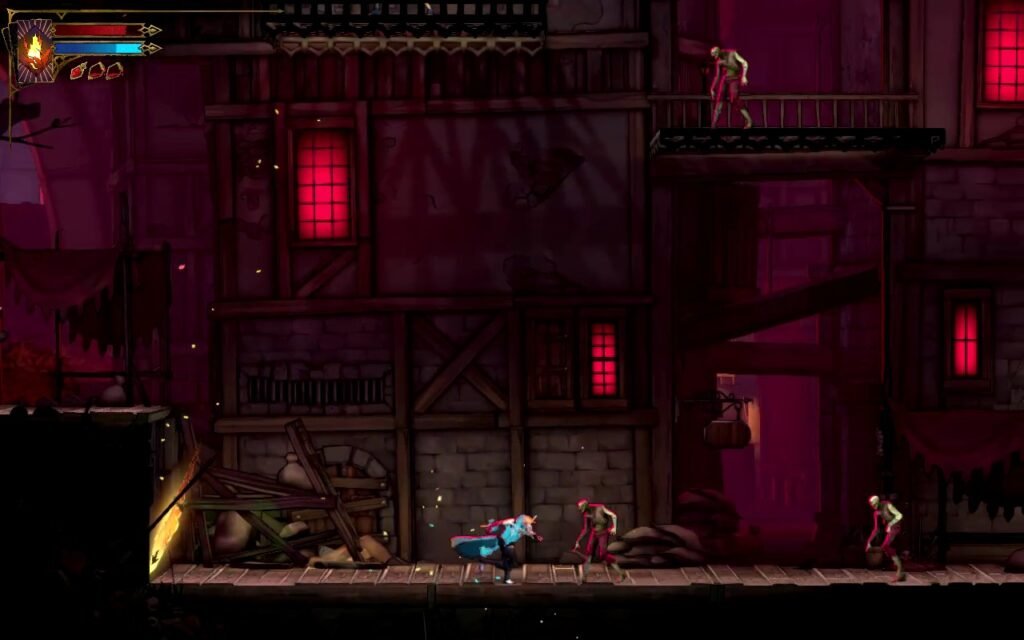
The demo opens with a long 2D animation that sets the scene. Paris is ablaze. The Church sends a desperate letter to famed vampire hunter Trevor Belmont, offering uncountable riches if he will help purge the city of whatever diabolic entity has set siege to it. Trevor arrives in Paris by gondola with his daughter Rose. The two speak for a bit, then Rose dismounts and the player takes over.
The first thing I noticed was the weight of Rose’s movement. Changing directions, attacking, and jumping all feel like you’re making a small commitment every time you press a button. Rose also can cast a long-range spell that’s a bit riskier since it has a short wind-up before release.
You can cancel an action any time by dodging, but there’s a fairly long cooldown between dodges, so you can’t abuse it. Pressing dodge twice quickly will extend the distance of your dodge. There’s nuance to it, though—the second press has to happen before the first dodge finishes. This means you have to almost be certain you’ll need that second dodge before you even commit to the first one.
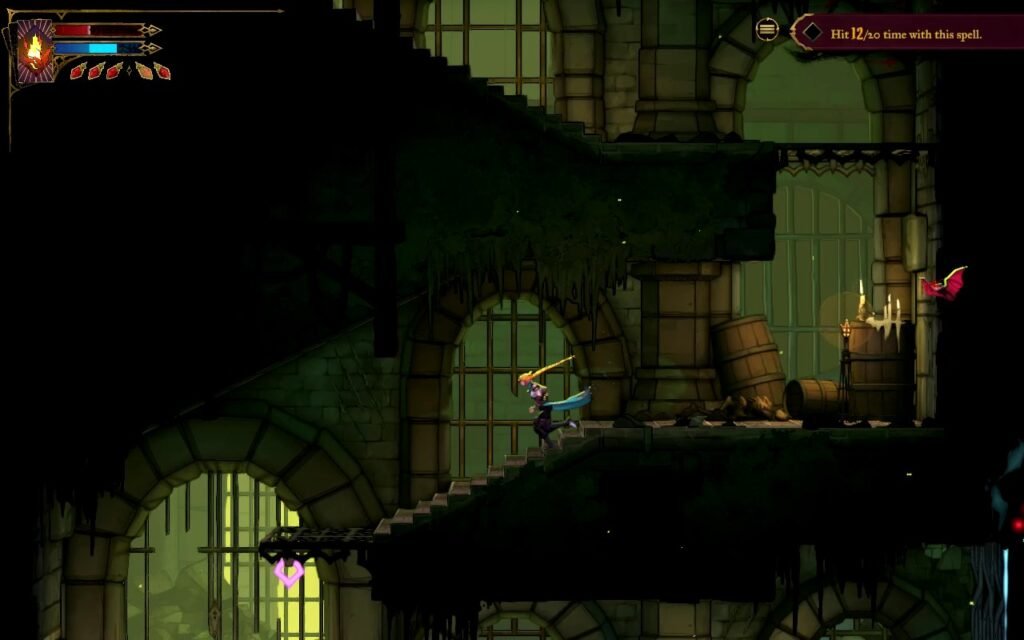
Careful dodging is particularly important when fighting the demo’s boss, The Fallen. Sometimes you have to double-dodge to get out of range of one of his long downward slashes. Ideally, you don’t want to do it during one of his short strikes, since that puts you out of range to retaliate with your sword.
Before separating from Trevor, her father hands Rose a deck of tarot cards. A gift form her mother. The demo is too short to really explore the tarot card system, but the general gist is that the cards gradually unlock as you progress, allowing Rose to access new abilities and equip different spells. The cards can also be upgraded by completing certain tasks, like killing a number of monsters with a specific spell or performing an action a certain amount of times.
The battle with The Fallen is easy enough once you get a hang of his attack patterns. I died once but came back with a vengeance. The demo ends shortly after.
My Final Thoughts
I played the entire thing on my Steam Deck on the default settings. I was hoping for a solid 60 FPS, but it wasn’t to be. The game does manage a solid 40, though, so I kept the screen locked on that and enjoyed my playthrough. There’s some mild stuttering just before cutscenes, but never during gameplay.
The demo took me roughly 30 minutes to complete. I walked away interested in playing more, but maybe someday, later, down the line. It’s not a day-one buy, is what I’m saying.