A major reason light-gun games faded from home consoles is that the simple arrangement supporting them fell apart. The television changed, the gun needed a new way to locate its aim, and each replacement asked people to buy into another combination of hardware and software. The games kept being made. Getting the right gun, screen and game together became the harder part.
That hardware history goes a long way towards answering why we all collectively stopped playing them. It is also why the answer can feel unsatisfying to anyone who remembers pointing a plastic gun at a television and immediately understanding what to do.
There are several histories tangled up here: the shooting controller, the arcade business, the home port and the on-rails shooter. They overlap, but they did not all disappear together. Separating them explains both why the genre became less visible and why people in retro communities are still putting so much work into it.
Classic Light Gun Tech Only Worked on CRT TVs
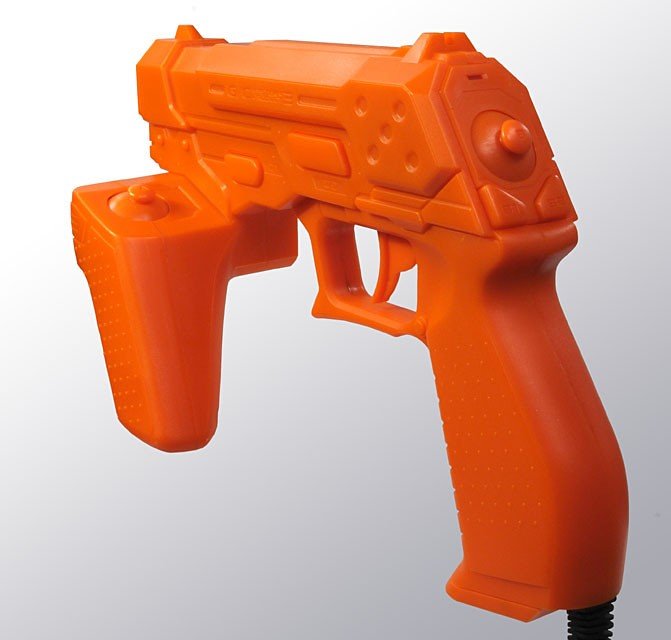
An old light gun was a light sensor in a gun-shaped shell. It needed the console and display to cooperate. Exactly what that cooperation involved depended on the system: some games checked whether a bright target was visible at a particular moment; others used the timing of the television’s scanning image to determine where the gun was pointing.
Nintendo’s photosensitive-gun patent describes target flashes and filtering for the television’s horizontal scan frequency. Nick Bild’s hardware experiments explore the Zapper’s response to pulsed light. Explaining every light gun as a device that timed the electron beam gives the wrong account of games such as Duck Hunt. Explaining them all as simple white-box detectors gives the wrong account of later coordinate-tracking guns. Either way, the screen was doing useful work for the input device. Replacing it was more consequential than changing the panel used to display an ordinary controller-driven game.
The transition to flat panels broke those assumptions. A new television did not reproduce the same light output and timing behavior, while scaling and processing introduced further compatibility problems. Even the word “CRT” is an incomplete shopping guide: a processed high-definition CRT can behave differently from the standard-definition set an old game expected.
Retro players still run into that distinction. A discussion about light guns on HD CRTs includes both compatibility warnings and a report of GunCon 2 working on a particular Panasonic set. A separate RCA owner’s troubleshooting thread shows the disappointment that follows assuming a tube television is automatically the answer. Their different results make model-specific compatibility worth checking.
Namco’s GunCon 2 technical explanation describes measuring the interval between video synchronization and the light reaching the gun; its television compatibility notice lists display types it cannot support. An old gun, original software and an arbitrary modern display are not interchangeable parts. You need a matching system. A better-looking picture alone does not supply one. The NESLCDMOD project demonstrates that selected NES shooting games can be adapted to modern displays, using modified game software and supported third-party guns or a hardware-modified original Zapper. That is an engineered workaround, rather than what happens when a stock Duck Hunt cartridge meets a new TV.
Flat Screens Made the Old Guns Obsolete, Not the Idea
Namco had an answer for this problem in 2007. In his explanation of the Guncon 3, Time Crisis 4 director Takashi Satsukawa describes a sensor-based system designed for different television types. His follow-up comments also explain the catch: the new gun could not play the old PlayStation 2 Time Crisis games, because those games expected a different detection method.
That is the hardware transition in miniature. A working replacement existed, yet buying it did not bring the old library along. The director also said wireless options would have made the bundle prohibitively expensive. The wired game, gun and sensors sold for $89.99 in the US at the time. That is a historical launch price, but it illustrates how many decisions sat behind what looked like a simple plastic accessory.
Nintendo took another route. The Wii Remote was already a pointing device, so the Wii Zapper was a frame for controllers people could use elsewhere. Nintendo bundled it with Link’s Crossbow Training. Its contemporary instructions describe aiming with the Remote and moving with the Nunchuk. The gun-shaped accessory did not have to establish an entirely separate audience from scratch. Nintendo’s support documentation explains that the Sensor Bar emits infrared light and the Remote contains the sensor. The television no longer has to produce the old scan signal for pointing to work.
Sony’s Move also carried the format forward. The PS3 release of Time Crisis: Razing Storm included Time Crisis 4 and DeadStorm Pirates, with Move support and Guncon 3 compatibility. These were substantial efforts to keep pointing and shooting available after the old television arrangement stopped being useful.
That history rules out a simple technological death sentence. It also exposes the continuing problem: Guncon, Wii Remote and Move were different products with different compatible libraries. A household could have a perfectly capable television and still lack the combination a particular game required.
| Route | What must work together |
|---|---|
| Original console + old gun | Match the original game and gun to a supported display. |
| Guncon 3, Wii or Move | Use games written for that specific controller system. |
| Modern PC gun | Choose border- or infrared-based tracking; configure the game and each player. |
| Licensed retro package | Buy the coordinated hardware and check which games are included. |
| VR shooting game | Use a supported headset and controllers; the social setting changes. |
The Home Version Has to Sell the Whole Arrangement
A console developer can generally assume its customer has the console’s standard controller. A light-gun game has an additional question to answer before anyone can enjoy the first stage: what will the player aim with?
A dedicated gun makes the fantasy immediately legible. It also creates a separate purchase, another object to store and another compatibility promise. Buying a second gun for a friend multiplies those concerns. A small software library can make the hardware harder to justify; limited peripheral ownership can in turn narrow the audience for the next game. That puts commercial pressure on a release requiring its own controller, even when the basic game is appealing.
The game itself can face different expectations at home. In his account of bringing Time Crisis 4 from arcade to PS3, Satsukawa describes adding free-movement FPS stages alongside the arcade material. The team was deliberately adapting the product to its home release. A tightly directed shooting sequence and a longer game built around free movement ask for different controls, development work and player commitment.
None of that makes an arcade-length game shallow. Scoring, target order, accuracy, routes and survival can support years of replay. It does mean that the economic unit changes. An arcade sells a turn on a complete attraction. A home release has to make the software and any special equipment worth owning.
The contrast is especially sharp for casual play. A friend can understand a gun and a target without understanding a camera stick. That accessibility is valuable, but it only helps after somebody has paid for and prepared the setup.
Arcades Kept the Part That Home Consoles Lost
The arcade cabinet contains the screen, controllers, software and calibration in one product. The operator handles the machinery; the visitor gets to play. That is an enormous advantage for a form of gaming whose appeal depends so much on the physical encounter.
Sega’s brochure presents House of the Dead: Scarlet Dawn as a theatre-style attraction. Arcade specialist Arcade Heroes documented another cabinet model in 2025, years after the original release. That is a more useful corrective to “arcades died” than nostalgia: manufacturers were still adapting the product for locations.
Raw Thrills’ Big Buck Hunter Reloaded combines hunting with additional campaigns, leaderboards and tournament qualification on its connected cabinets. Its Godzilla arcade range puts shooting inside a much larger package of screens, seating and motion. These are businesses selling a physical outing as much as a program.
The clearest counterexample is Enter the Gungeon: House of the Gundead. Devolver identifies it as an original two-player light-gun arcade game, released in 2023, with Sinden guns and a 43-inch display. Its procedurally generated floors and unusual weapons also answer the suggestion that the format cannot try anything beyond another fixed corridor of targets.
Some arcade shooters use mounted positional controls rather than an optical gun reading the screen. A gun-shaped input device does not identify the tracking method by itself. What these attractions share is the act of aiming at a presented scene, with the necessary machinery supplied together.
These releases and manufacturer listings show the format continuing beyond the old home-console arrangement. Its absence from a particular living room is a poor measure of its existence.
The Hobbyists Are Solving a Real Problem
Modern home light guns offer several ways around the display problem. They also make clear why there is no single replacement that everyone agrees on.
Sinden’s system uses a camera and a visible screen border as its reference. GUN4IR uses four infrared reference points around the display and is offered through DIY and prebuilt routes. Ultimarc’s AimTrak uses an infrared LED bar and an optical sensor. These are alternatives to relying on the old television scan behavior. They bring different setup requirements rather than one universal experience.
Ultimarc’s setup guide makes the physical constraints concrete. The sensor needs to keep the LED bar in view across the screen. Its troubleshooting examples specify approximate minimum distances of two feet for a 19-inch display and three feet for a 28-inch display. Mounting position and room lighting can matter. For an AimTrak owner, moving a chair or changing the screen can therefore become part of getting ready to play.
Community discussions fill in the everyday consequences. In a multiplayer hardware thread on r/cade, owners debate DIY work, software configuration and whether occasional play justifies the expense. The same discussion includes successful two-Sinden and four-gun setups. The equipment works for people; the work involved is uneven.
A Sinden owner’s retro-gaming setup guide walks through emulator settings, resolution and calibration, then celebrates getting games running. In another Sinden discussion, adding a second gun creates a problem that the first did not have. Replies turn to device IDs and software versions. A Point Blank two-player troubleshooting thread similarly shows how a successful single-gun setup need not immediately become a successful evening for two.
The ArcadeControls GUN4IR discussion is evidence of an active specialist scene, with builders working through hardware and tracking questions. A light-gun community comparison discusses borders, sensor arrangements, lighting and multiplayer tradeoffs. Owners are choosing between different compromises.
For an enthusiast, configuring a cabinet can be part of the pleasure. For somebody who wants twenty minutes of Point Blank with a friend, it can be the reason to play something else. Both reactions are reasonable. The second is the one a mainstream revival has to accommodate.
The Games and Their Old Controllers Are Separate Preservation Problems
An emulator can preserve a game’s logic without automatically recreating its intended input. A mouse can put a crosshair in the right place while losing the physical act of sighting down a gun. A modern gun can supply that act while still needing the emulator to recognize two independent devices, an off-screen reload or a pedal.
The discussion around a PCSX2 light-gun split-screen fork shows that work continuing. Users discuss calibration, performance and getting two-player Time Crisis working. The existence of those efforts is encouraging; their necessity also shows how much sits between a preserved game file and its original social experience.
That distinction is familiar from B5R’s coverage of the recovered PokéPark fishing game. Recovering software and keeping its behavior accessible are related jobs. A light-gun game adds another layer: the controller, the display and the way people stand together to play it.
The practical route today depends on the experience someone wants. Original hardware calls for verified display compatibility. A PC setup calls for a gun and software that support the intended games and number of players. An arcade visit hands those decisions back to an operator. An HDMI adapter changes the video connection; it does not give an old gun a new tracking system.
There are efforts to package that work again. G’AIM’E’s officially licensed Time Crisis system explicitly pitches modern-display play and simpler setup, and its downloads page provides manuals and controls for Time Crisis, Point Blank and Steel Gunner 1 and 2. It is a concrete attempt to sell a coordinated home experience again. Retro Shooter’s current console listing also illustrates why the library needs checking: it says classic games are not included because of intellectual-property restrictions. Hardware compatibility does not supply a lawful copy of every game a buyer remembers.
Some of the Genre Moved Into VR
VR inherited much of the appeal: point a tracked hand at a target, fire, and react to threats entering a carefully staged space. Until Dawn: Rush of Blood makes that connection unusually explicit. Supermassive’s announcement calls it an arcade-style shooter, presented as a horror rollercoaster.
The developer’s replayability explanation lists scoring, secrets, alternate routes and difficulty levels. Those are recognizable arcade pleasures, carried into a headset. Raw Thrills also offers Godzilla Kaiju Wars VR, combining force-feedback blasters with a motion attraction.
VR is therefore one continuation of the design, but it changes the purchase and social setting. A headset is additional hardware, and a person wearing it is not sharing the television in quite the same way as two people standing beside each other with plastic guns. It can deliver an excellent shooting attraction without replacing the exact thing someone misses about Virtua Cop.
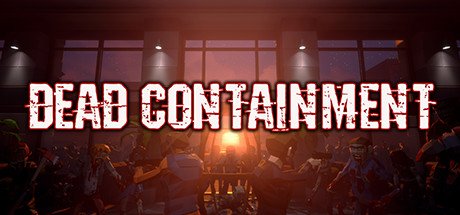
There are also independently developed games for conventional PC screens. Dead Containment’s own Steam page lists light-gun support, branching paths and online cooperation; it remains an Early Access release. The genre’s ideas have outlets beyond preserving old arcade releases.
A Comeback Needs to Be Easy to Join
The technical obstacle has solutions. The remaining challenge is assembling them into something that feels like a normal way to play: dependable aiming, clear compatibility, straightforward two-player support and enough good games to justify the equipment. A publisher or platform holder can make that easier by supporting a shared device across a library. Leaving each buyer to assemble a different combination makes the audience harder to reach.
The concrete history runs through incompatible generations of hardware, documented peripheral cost decisions, continued arcade products and communities working through the practical details of home play. Cultural discomfort with realistic gun-shaped toys can affect product design—Satsukawa discussed regional colour requirements—but it does not explain away the games that kept being sold.
Light-gun games still offer something distinctive. The screen can do the moving while the player concentrates on noticing, aiming and reacting. Two people can share the same scene without learning a pair of camera-control schemes. A brief game can reward the next attempt through accuracy and familiarity instead of another ten hours of content.
The people building modern guns and configuring old games have kept that possibility alive. A broader return would mean doing more of that work for the player, as the new packaged systems are trying to do. The invitation is still simple: pick up the gun, stand beside a friend and try again. The industry has to make getting to that moment simple too.