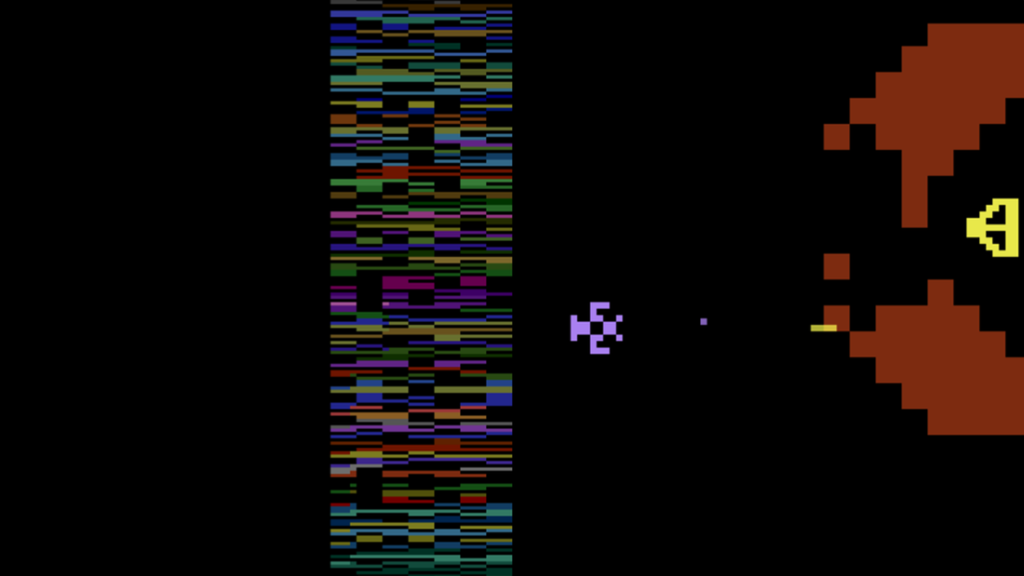
Howard Scott Warshaw, the designer of Atari’s E.T. the Extra-Terrestrial and Yars’ Revenge, sees a familiar problem in AI-assisted game development. Making a game is getting easier. Finding one you’ll want to play could get harder. He compares that growing supply with the glut of releases that crowded store shelves before the 1983 U.S. video game crash.
Warshaw spoke at DevGAMM Lisbon, held November 17–18. GamesIndustry.biz reported that in his “From Atari to AI” talk he saw room for genuinely interesting games to come from people who can now put their ideas into practice. He also expects many more releases competing for the same attention.
Warshaw expects storefronts to change how they surface games as the supply grows. Investors in the early 1980s could write video games off as a fad, he told the audience. Today there’s an established audience for games, and stores have to help those players make sense of more releases.
On Steam, getting a look depends partly on where a game lands in the queue. Valve’s Steamworks documentation says the New Releases Queue gives priority to games that have had fewer views, while a player’s preferences can filter out certain tags or product types. That gives a small game a way onto someone’s screen even if they’ve never heard of it. Accurate tags help players narrow down the catalog to the kinds of games they want to browse.
A recommendation can also come from someone whose taste you trust. When Shuhei Yoshida singled out Project Revenant, he gave a small game a reason to stick in people’s minds. A storefront has to find ways to do that for games without someone like Yoshida in their corner.